
Through a grant from the U.S. Environmental Protection Agency’s (EPA) Pollution Prevention (P2) Program (funded by the Bipartisan Infrastructure Law), PennTAP created a unique, three-tiered training platform to help manufacturers across the Commonwealth embrace pollution prevention (P2) practices that conserve resources, reduce waste, and improve efficiency, leading to lower costs and economic benefits.
In addition to strengthening Pennsylvania’s manufacturing sector, the initiative developed a replicable model for other states seeking to drive both economic growth with environmental stewardship—underscoring PennTAP’s leadership in sustainability.
Practical Strategies, Localized Support, One-to-One Coaching

PennTAP launched the multi-tiered training initiative targeting two critical manufacturing sectors: food and beverage manufacturing and metal fabrication. The program combined statewide webinars, community-based sessions, and personalized virtual coaching to deliver practical strategies and individualized tactics aimed at achieving long-term results.
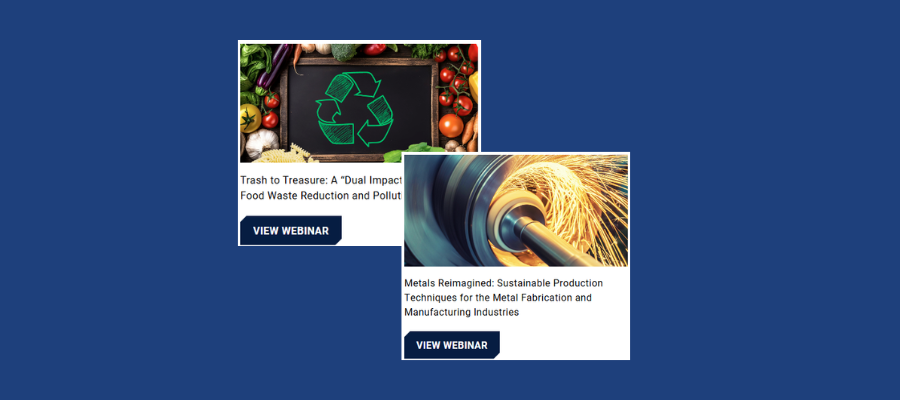
Webinars introduced tools like the EPA’s Waste Reduction Model and Excess Food Opportunity Map for food processors, and benchmarking frameworks for metal manufacturers to reduce water use and hazardous waste. Industry leaders, including The Hershey Company and Franklin Industries, shared real-world insights, reinforcing the operational and economic value of P2 practices.

Community training focused on regional industry needs. In Berks County, PennTAP partnered with local recyclers, food banks, and municipal sustainability offices to showcase solutions for food waste reduction, including upcycling and composting. Participants toured Unique Snacks, a pretzel manufacturer implementing zero-waste initiatives. Metal manufacturers visited Benton Foundry in Central Pennsylvania to observe award-winning energy conservation and green production techniques.
To bridge education and implementation, PennTAP offered virtual coaching tailored to individual facilities. These sessions helped companies benchmark energy use, develop wastewater pretreatment plans, and create greenhouse gas reduction roadmaps. Through the process, several participants connected with Penn State students for capstone projects, turning sustainability goals into actionable plans.
Measurable Achievement and a Replicable Model
The impact was significant. The initiative:
- Reached more than 14,000 manufacturers through outreach.
- Engaged over 650 participants across training formats
- Recorded hundreds of webinar views.
By combining broad education with localized support and one-on-one guidance, PennTAP demonstrated how a layered approach can drive measurable progress toward sustainability—especially in communities facing environmental justice challenges.
Webinars from the training platform, along with PennTAP’s full webinar catalogue, are available to view on-demand at penntap.psu.edu/events.